
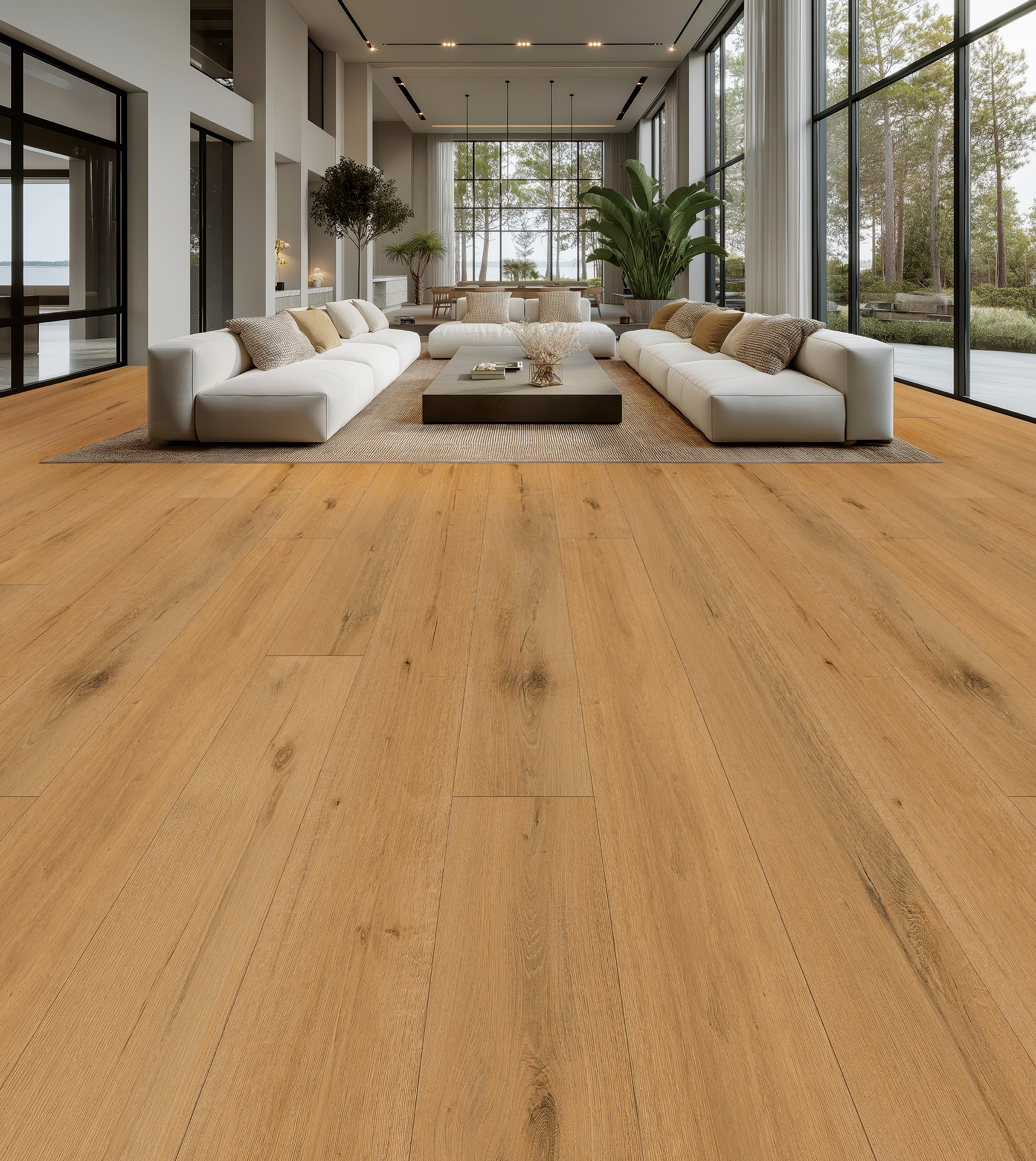
Short answer: Yes — waterproof laminate like AquaProof is a strong choice for powder rooms and laundry rooms, and a reasonable one for full bathrooms where water gets wiped up. The honest line: coverage applies to topical spills, not standing water, so a tub that regularly overflows is a different conversation. Here is the room-by-room truth.
What “waterproof” covers in a bathroom
AquaProof is a waterproof surface laminate: the wear surface stops water from penetrating, so splashes, drips, and wet footprints sit on top until someone wipes them. The warranty covers exactly that — topical, localized spills with cleanup. It does not cover flooding or standing water, and there is no waterproof warranty under the plank. In bathroom terms: sink splash is routine; an unnoticed supply-line leak soaking the floor overnight is not a flooring problem any laminate warranty solves.
Powder rooms and half baths: an easy yes
A half bath has a sink, a toilet, and no tub or shower — which means splash and drip, not immersion. That is squarely what a waterproof surface is built for. AquaProof adds two things tile does not: warmer, quieter footing and a wood look that carries the hallway floor straight through the doorway without a material change. The AC4 wear surface is also rated for light-commercial traffic, so the busiest guest bath in the house sits comfortably inside its limits. For most homes, the powder room is the easiest waterproof-laminate decision there is.
Laundry and utility rooms: yes, with one habit
Laundry rooms live with detergent drips, condensation, and the occasional sloshed basket — all topical, all wipeable. The one habit that matters: check the washer’s supply hoses yearly and use a drip pan if the machine sits directly on the floor. A burst hose is flooding, and flooding is excluded — on AquaProof and on essentially every laminate warranty in the market.
Full bathrooms: yes, for careful households
A full bath adds a tub or shower, and with it the real question: does water stand on your bathroom floor? In an adult household where bath mats catch the drips and spills get wiped, AquaProof performs well — the waterproof surface, tight Uniclic joints, and embossed texture handle daily humidity and splash. In a kids’-bath-tsunami household, be honest with yourself: water that pools and sits around a tub several nights a week is standing water. If that is your bathroom, tile the kids’ bath and put AquaProof everywhere else.
Three install details that matter near water
- Seal the perimeter. Where the floor meets the tub, shower curb, and toilet flange, finish the expansion gap with a flexible silicone sealant rather than leaving it open under the trim.
- Keep the climate in range. Run the bath fan during and after showers; the warranty’s climate band is 35–50% relative humidity and 60–85°F, and a well-vented bathroom stays inside it.
- Skip the steam mop. Steam forces moisture into joints and voids the warranty — a damp (not wet) mop is all a waterproof surface needs.
The PVC-free difference in a small, closed room
Most wood-look bathroom floors are vinyl — a PVC product. AquaProof delivers its waterproof surface without PVC, which matters most in exactly the rooms this post is about: small, warm, frequently closed spaces where air exchanges slowly. A PVC-free build means the practical performance buyers want from vinyl, with a wood-fiber-based plank instead of plastic through the room. For households choosing materials carefully — nurseries down the hall, allergy-conscious homes — that is a real differentiator, and it is the same plank performance everywhere else in the house.
Where laminate should not go
Deliberately honest, because it earns trust: AquaProof does not belong on a shower floor, around an indoor pool, in a sauna, or in any room that cannot stay inside the required humidity range. Those are immersion and extreme-humidity environments — tile territory. A brand that says “waterproof” and lets you believe it means “submersible” is setting up a claim denial; the distinction is spill protection, and within it, AquaProof is excellent.
Frequently asked questions
Will shower humidity ruin waterproof laminate?
No — normal bathroom humidity with a working exhaust fan is well within AquaProof’s tolerance. The requirement is keeping the home between 35–50% relative humidity over time, which ventilation handles. Condensation that beads and runs should be wiped like any spill.
What happens if the toilet overflows?
Treat it like a big spill: get the water up promptly and the waterproof surface will have done its job. Water left standing for hours is excluded from coverage — the speed of cleanup is what separates a non-event from a claim.
Is tile a better bathroom floor than waterproof laminate?
For shower floors and flood-prone baths, yes — tile tolerates immersion. For powder rooms, laundry rooms, and well-kept full baths, AquaProof matches the water reality of the room while being warmer, quieter, and continuous with wood-look floors outside the door.
Does a bathroom install need anything special under the plank?
The same 6-mil poly moisture barrier required on every AquaProof install, plus silicone at wet-edge perimeters. Over concrete or wood subfloor alike, the barrier stays mandatory — skipping it voids the warranty.
See how AquaProof looks beyond the bathroom door — browse the New England Collection and the full AquaProof collection, or order free samples via the shop.
Keep reading
- Can You Install Waterproof Laminate Over Concrete? Yes — Here’s the 6-Mil Rule
- What Is the Best Waterproof Flooring?
- How to Clean Waterproof Vinyl Plank and Laminate Flooring
Explore the collections: AquaProof · AquaProof XL · Metropolitan · New England · Midwest · Westcoast